
FHA Commercial Loans
Long-Term FHA/HUD Financing for Multifamily & Eligible Commercial Properties
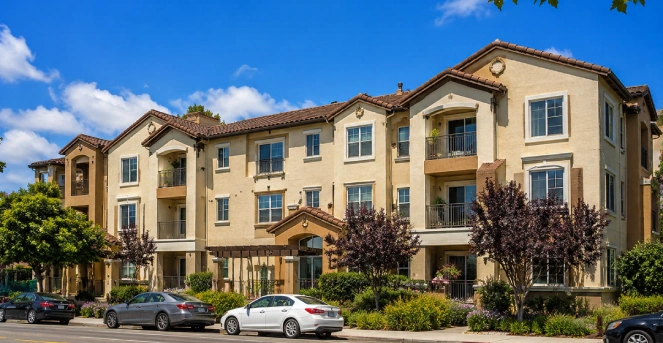
FHA commercial financing can provide attractive long-term loan options for qualified multifamily, healthcare, and other eligible real estate projects.
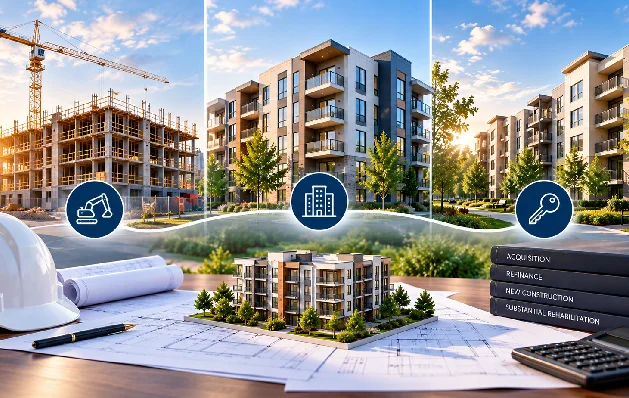
At SBAcommercialloans.com, our financing capabilities extend beyond SBA loans. We help commercial real estate owners, investors, and developers explore FHA/HUD commercial loan programs for eligible property acquisitions, refinances, new construction, and substantial rehabilitation projects.
For qualified properties, FHA-insured financing may offer long-term loan structures, competitive interest rates, and financing designed specifically for multifamily and certain healthcare real estate.
Program Overview
What Is an FHA Commercial Loan?
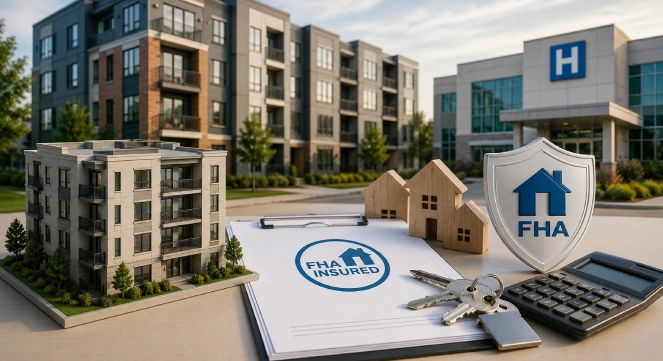
FHA commercial loans are mortgages originated through approved lenders and insured by the Federal Housing Administration (FHA), a part of the U.S. Department of Housing and Urban Development (HUD).
These programs are different from residential FHA loans used by individual homebuyers. FHA/HUD commercial programs primarily support eligible multifamily housing and certain healthcare facilities. Because the mortgage is FHA-insured, qualified projects may benefit from attractive long-term financing.
Benefits
Potential Benefits of FHA Commercial Financing
Depending on the program and transaction, potential advantages may include:
Competitive interest rates
Long-term fixed-rate financing
Extended amortization
Acquisition and refinance options
Construction financing
Substantial rehabilitation financing
Non-recourse structures on qualifying transactions
Affordable & Market-Rate Housing
Programs for certain healthcare properties
Actual terms and eligibility depend on the applicable FHA/HUD program and underwriting requirements.
Eligibility
Eligible Property Types
FHA/HUD commercial financing may be available for qualifying:
Apartment buildings
Multifamily communities
Market-rate housing
Affordable housing
Senior housing Facilities
Skilled nursing facilities
Assisted living facilities
Board-and-care facilities
Other eligible housing and healthcare projects
Not every commercial property qualifies for FHA financing. Traditional office, retail, industrial, and similar properties generally require SBA, conventional, bridge, DSCR, or other commercial financing.
Underwriting
How Are FHA Commercial Loans Underwritten?
HUD/FHA underwriting considers both the property and the borrower. Factors may include:
Property value
Net Operating Income (NOI)
Debt Service Coverage Ratio (DSCR)
Loan-to-value or loan-to-cost
Occupancy and operating history
Property condition
Borrower financial strength
Ownership and management experience
Market conditions
Third-party reports and HUD requirements
Construction and substantial rehabilitation projects typically require additional review of development costs, plans, specifications, construction experience, and project feasibility.
Comparison
FHA vs. Fannie Mae & Freddie Mac
FHA/HUD, Fannie Mae, and Freddie Mac can all provide multifamily financing, but the programs have different structures and underwriting requirements.
FHA/HUD can be particularly attractive for borrowers seeking long-term financing and for qualifying construction or substantial rehabilitation projects.
Fannie Mae and Freddie Mac may provide alternatives for stabilized multifamily acquisitions and refinances.
Our team can evaluate multiple programs rather than limiting your transaction to one financing source.
Next Step
Find the Right FHA/HUD Loan
Tell us about your property, number of units, occupancy, purchase price or value, net operating income, requested loan amount, and financing objective.
Our commercial lending team can evaluate FHA/HUD, Fannie Mae, Freddie Mac, Bridge, DSCR, SBA, and other commercial financing options for your transaction.
Explore FHA Commercial Financing
SUBMIT YOUR PROPERTY FOR REVIEW
FHA/HUD financing is subject to current federal program requirements, lender underwriting, property eligibility, appraisal, third-party reports, borrower qualifications, and program availability.
Ready to Explore Your Financing Options?
Whether you're purchasing a business, buying commercial real estate, refinancing existing debt, or expanding your operations, our team is here to help you understand your financing options.

Loan Programs
Company
Contact Us
- 855-90-MYSBA
- sales@sbacommercialloans.com
- 13000 Harbor Dr Suite 228D,
Woodbridge, VA 22192 - Mon - Fri: 10:00 AM - 7:00 PM
SBAcommercialloans.com is operated by Commercial Lending USA. Financing is subject to lender approval, SBA eligibility requirements, underwriting, credit review, and applicable program guidelines. Not all applicants or transactions will qualify. Loan terms, rates, and program availability may vary based on borrower qualifications and lender requirements.
BBB Member
We're A Member Of

© 2026 SBACommercialLoans.com. All rights reserved.