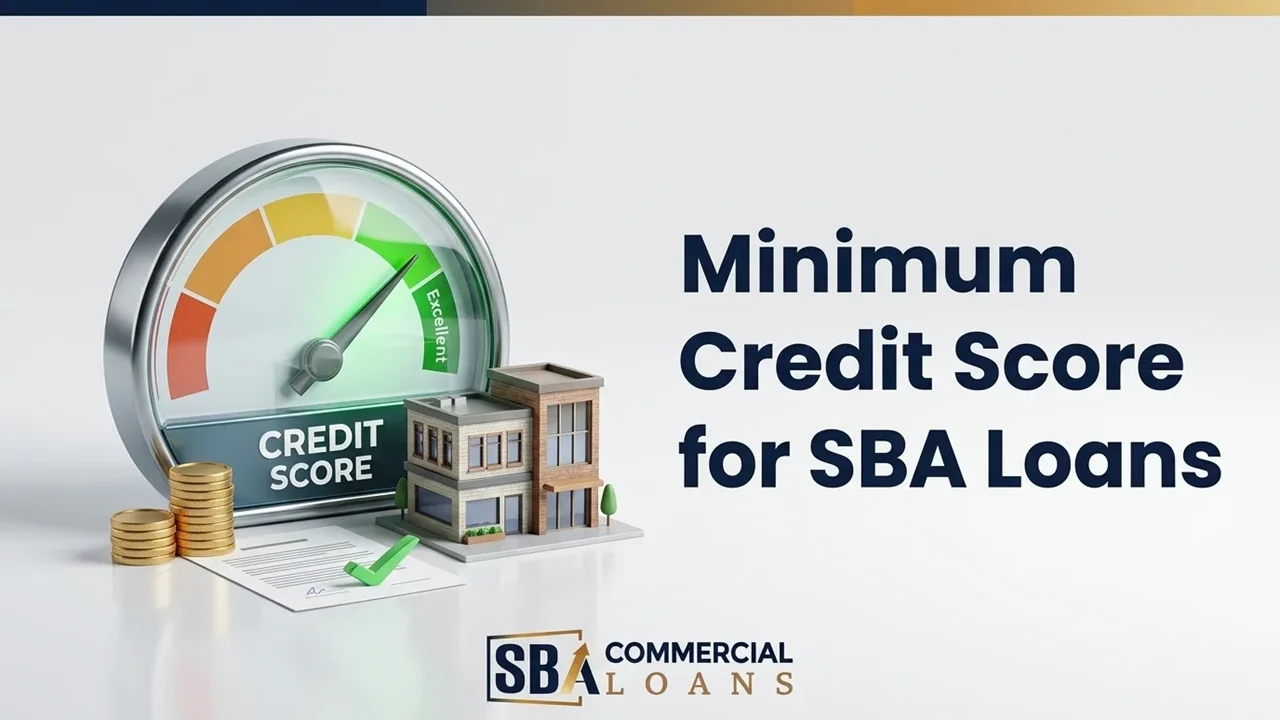
Every business owner researching commercial financing eventually asks the same question: what credit score do I actually need? For SBA-backed real estate loans, the honest answer is more nuanced than a single number. The minimum credit score for SBA loan approval isn’t set by the federal government. It is largely determined by the individual lenders who fund these loans, using the SBA guarantee as a safety net rather than a universal credit rule.
Understanding how that works, and what lenders actually look at beyond the number on your credit report, can make a significant difference when preparing your SBA loan application.
There Is No Official SBA Minimum Credit Score
This surprises many first-time applicants. The Small Business Administration does not publish a hard credit floor for either the SBA 7(a) or SBA 504 loan programs. Instead, SBA guidance leaves credit evaluation largely to the discretion of the lender originating the loan, within the program’s broader underwriting standards.
That means two lenders can review the same applicant and reach different conclusions. One might decline an application at a 640 score, while another may consider the borrower’s complete financial profile.
This is one reason shopping your deal with multiple SBA lenders can be useful, especially if your first lender does not approve the application.
What Credit Score Do SBA Lenders Typically Look For?
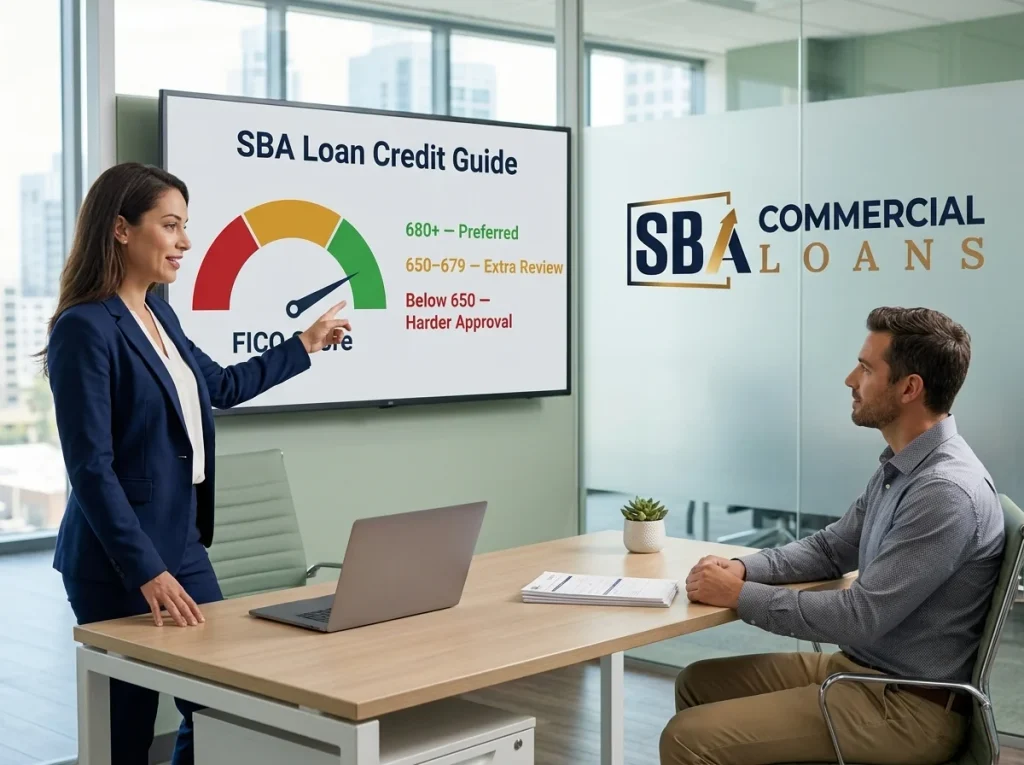
In practice, many SBA lenders commonly look for a personal FICO score of 680 or higher from applicants and guarantors, although lender requirements vary.
A score between 650 and 679 may still be considered, but it can result in additional scrutiny and may require stronger compensating factors elsewhere in the application.
A lower score can make approval more difficult, but credit score is only one part of the overall underwriting process.
What Is the SBSS Score?
Separate from your personal FICO score, many SBA lenders may use the SBSS score, or FICO Small Business Scoring Service score.
The SBSS score can range from 0 to 300 and may incorporate information from personal credit, business credit, and application data.
For certain SBA streamlined processing channels, an SBSS score of 155 is generally associated with automated prescreening. Falling below a particular automated threshold does not necessarily mean the loan cannot be considered, as some applications may require additional or manual underwriting.
Personal Credit vs. Business Credit
Personal credit reflects your individual borrowing history, including credit cards, mortgages, and auto loans.
Business credit reflects how your company has handled business credit accounts, trade lines, and other financial obligations.
Both can be relevant to SBA underwriting, particularly when an automated scoring model such as SBSS is involved.
Minimum Credit Score for SBA Loan: SBA 7(a) vs. SBA 504
Credit evaluation can vary depending on the SBA loan program and the lender.
SBA 7(a) Loan Credit Requirements
The SBA 7(a) loan is the SBA’s primary general-purpose business loan program. It can be used for purposes including commercial real estate, working capital, equipment, refinancing, and other eligible business needs.
Lenders may place significant emphasis on credit history, repayment ability, business financials, and overall risk.
SBA 504 Loan Credit Requirements
The SBA 504 loan is designed primarily for major fixed assets, including owner-occupied commercial real estate and certain equipment.
Because the financing structure involves a participating lender and a Certified Development Company, credit evaluation can differ from one lender or CDC to another. Cash flow, equity injection, collateral, and overall financial strength may also influence the underwriting decision.
What Can Help If Your Credit Score Is Low?
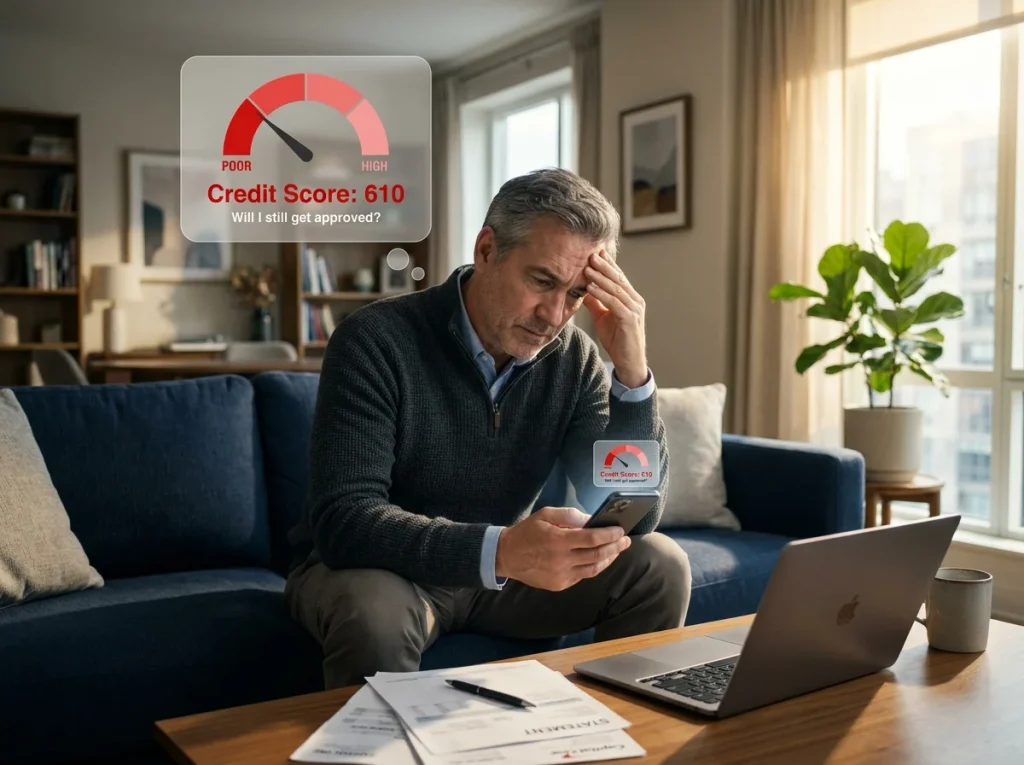
A credit score below a lender’s preferred range does not necessarily end the conversation. Lenders may consider several compensating factors for low credit SBA loans.
Strong Cash Reserves
Having substantial liquid reserves can demonstrate that the business has additional resources available if revenue temporarily declines.
Some lenders may view six months or more of operating liquidity favorably, although specific requirements vary.
Larger Equity Injection
A larger down payment can reduce the lender’s exposure and demonstrate greater financial commitment to the transaction.
For borrowers with credit concerns, contributing more equity than the minimum required may strengthen the overall application.
Industry Experience
Relevant business and industry experience can also be an important part of the underwriting picture.
A borrower with significant experience operating a similar business may present a different risk profile than someone entering an unfamiliar industry.
Additional Guarantor
A financially stronger co-owner or guarantor may provide additional support for a borderline application, subject to the lender’s requirements and applicable SBA rules.
Explanation of Previous Credit Problems
If your credit history includes a specific event that caused temporary financial difficulty, providing a clear and factual explanation can help the lender understand the circumstances.
Examples could include a documented business disruption, medical hardship, or other significant financial event.
Why Lender Overlays Matter
Because the SBA does not establish one universal credit score requirement for all lenders, individual lenders may apply their own internal underwriting standards, commonly referred to as lender overlays.
For example, one lender may consider an applicant with a lower credit score when the rest of the financial profile is strong, while another lender may have a higher internal minimum.
As a result, the same borrower may receive different responses from different SBA lenders.
Working with a broker or lending professional who has access to multiple lending channels can help identify lenders whose underwriting checklist are appropriate for a particular application.
How to Prepare Your Credit Before Applying
If your credit score is below your target lender’s preferred range, taking time to prepare before submitting an application may improve your overall profile.
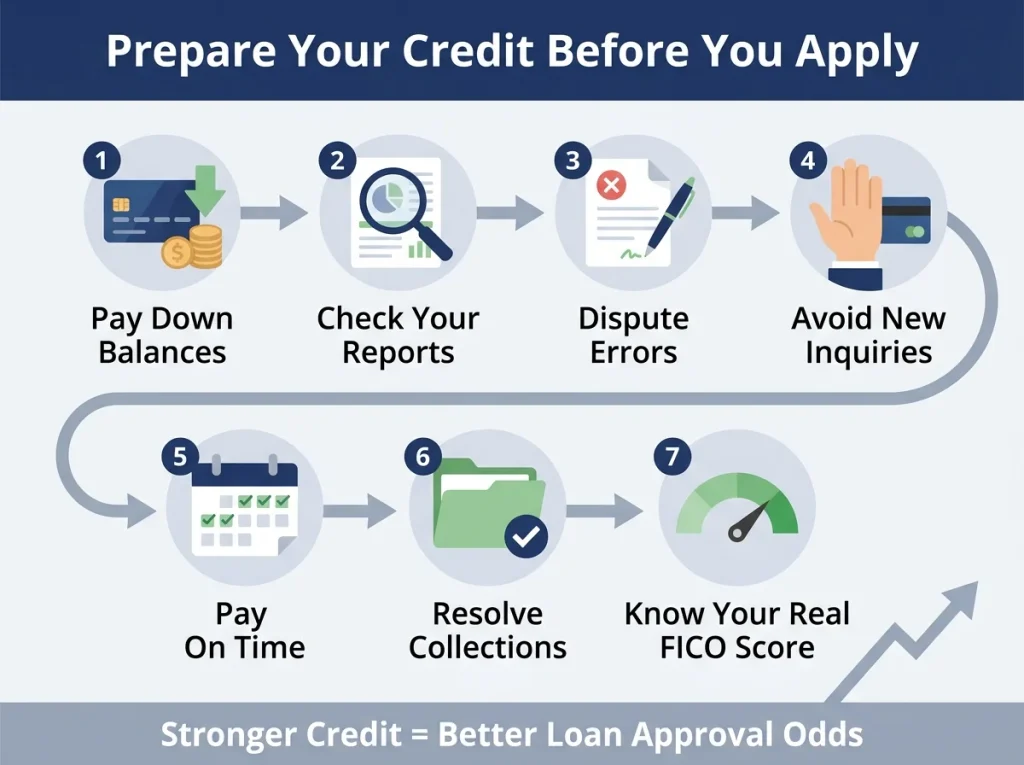
Consider these steps:
- Pay down revolving credit balances.
- Review your credit reports for errors.
- Dispute inaccurate information with the appropriate credit bureau.
- Avoid unnecessary new credit inquiries.
- Maintain consistent, on-time payments.
- Resolve outstanding collection accounts where appropriate.
- Review your actual FICO score rather than relying only on generic credit-monitoring scores.
The Consumer Financial Protection Bureau provides resources for consumers who want to review and dispute credit report inaccuracies.
It can also be useful to understand which credit scoring models may be used by lenders, since the score shown through a consumer credit-monitoring service may not always match the score used during lending decisions.
What If an SBA Lender Declines Your Application?
A decline from one lender does not necessarily mean every SBA lender will reach the same conclusion.
Lenders can have different internal credit policies, risk tolerances, and underwriting requirements. Before assuming SBA financing is unavailable, you may want to understand why the application was declined and whether another lender’s requirements differ.
Depending on the circumstances, borrowers may also explore alternative financing options while working to strengthen their credit profile.
There is no single credit score that guarantees SBA loan approval, and there is no universal SBA credit score that automatically disqualifies every applicant.
The lender may consider your personal credit, business credit, financial statements, cash flow, SBSS score, equity contribution, experience, liquidity, and overall ability to repay the loan.
A borrower with a lower credit score may still have financing options when other parts of the application are strong. Understanding your credit profile and working with lenders whose requirements fit your situation can help you approach the SBA financing process more effectively.
Frequently Asked Questions
What Is the Actual Minimum Credit Score for an SBA Loan?
There is no universal SBA-mandated minimum credit score. Many lenders commonly look for a personal FICO score around 680 or higher, while some may consider applicants with lower scores depending on the overall application.
What Is an SBSS Score and Why Does It Matter for SBA Loans?
The SBSS score is a business credit scoring model that can incorporate personal credit, business credit, and application information. The score ranges from 0 to 300 and may be used in certain SBA loan screening processes.
Can I Qualify for an SBA Loan With a Credit Score Under 650?
It can be more difficult, but a score under 650 does not necessarily mean financing is impossible. Strong cash reserves, business experience, additional equity, and other compensating factors may be considered by certain lenders.
Does Business Credit Matter as Much as Personal Credit for an SBA Loan?
Both personal and business credit can be relevant. The importance of each depends on the lender, loan program, and underwriting process. Business credit can also contribute to certain scoring models, including SBSS.
Why Did One SBA Lender Decline Me While Another Considered My Application?
SBA lenders can have different internal credit policies and underwriting standards. One lender may decline an application while another may evaluate the same borrower differently based on its own requirements and risk criteria.
Should I Check My Credit Score Before Applying for an SBA Loan?
Yes. Reviewing your credit reports, correcting inaccurate information, paying down revolving balances, and maintaining on-time payments can help you prepare a stronger application before approaching an SBA lender.